Naidu Rasant
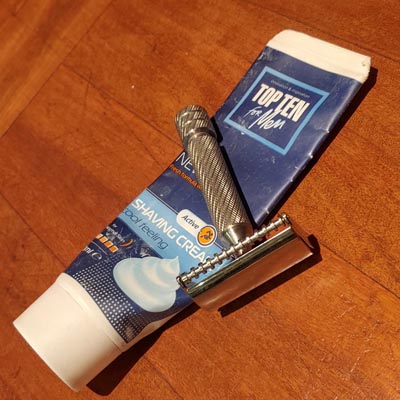
The Naidu Rasant was designed by Gopalswamy "G.D." Naidu - (A.K.A - The Edison of India or the creator of Coimbatore) and was made by Kaco, (the Kupfer-Asbest Co) in Heilbronn, Germany during the mid-1930s. I've seen it referred to as the First Electric Razor. I'm not sure how correct this is because I've seen patents using a similar concept going back into the early 1920's.
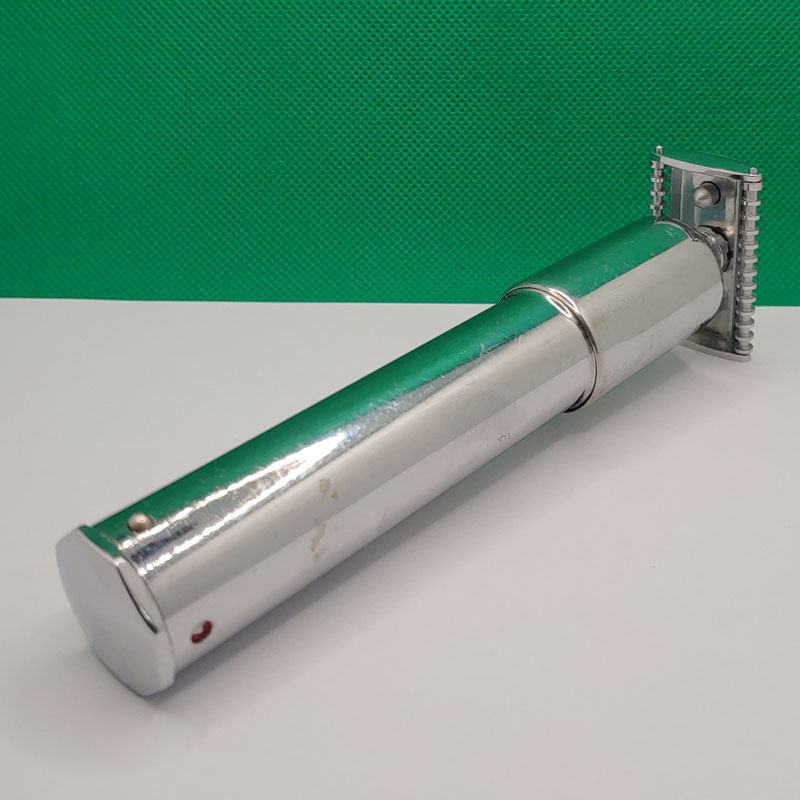
The handle is there to make the razor vibrate and the bulk of it is a battery compartment. The top thicker part houses the workings.
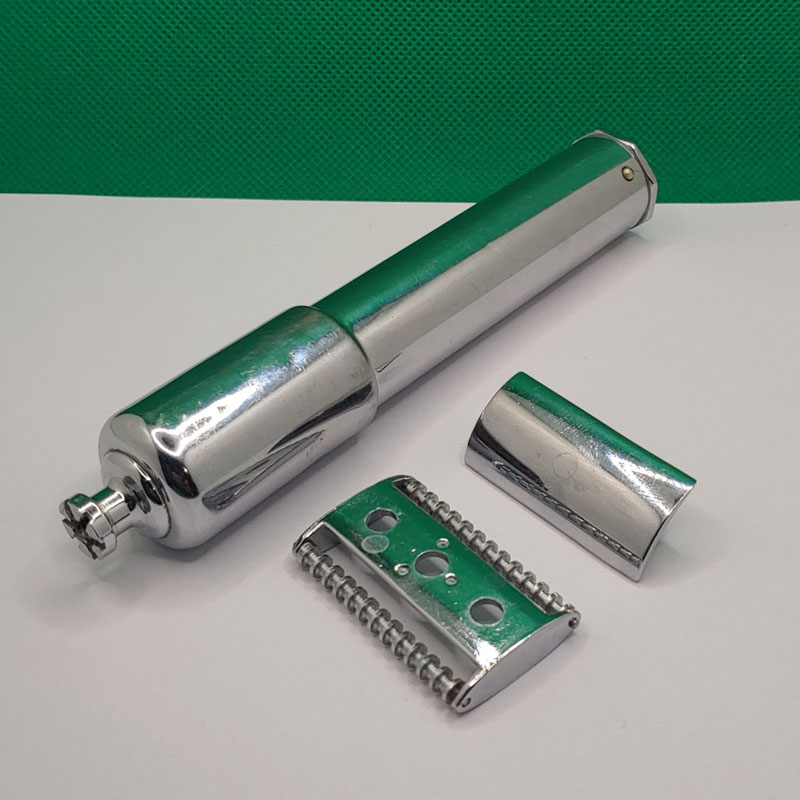
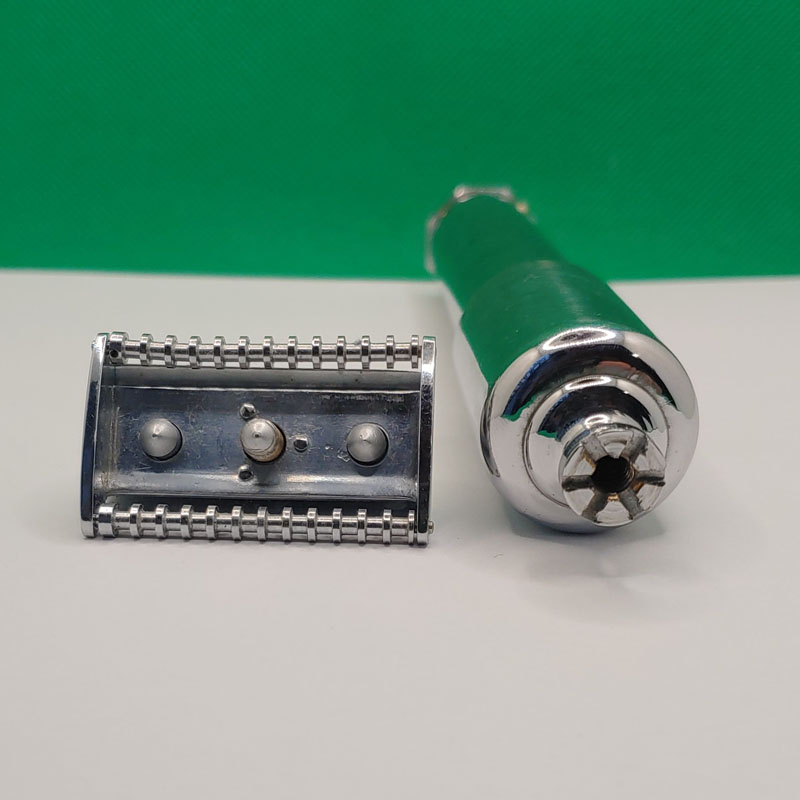
As mentioned elsewhere on this website, it was made in a time that the blades were thicker and had more spring in them so adjustability is by way of blade tension. Using our current thin blades the third click is bearly holding it. It uses a very similar "notch" system as a Just Rasoir.
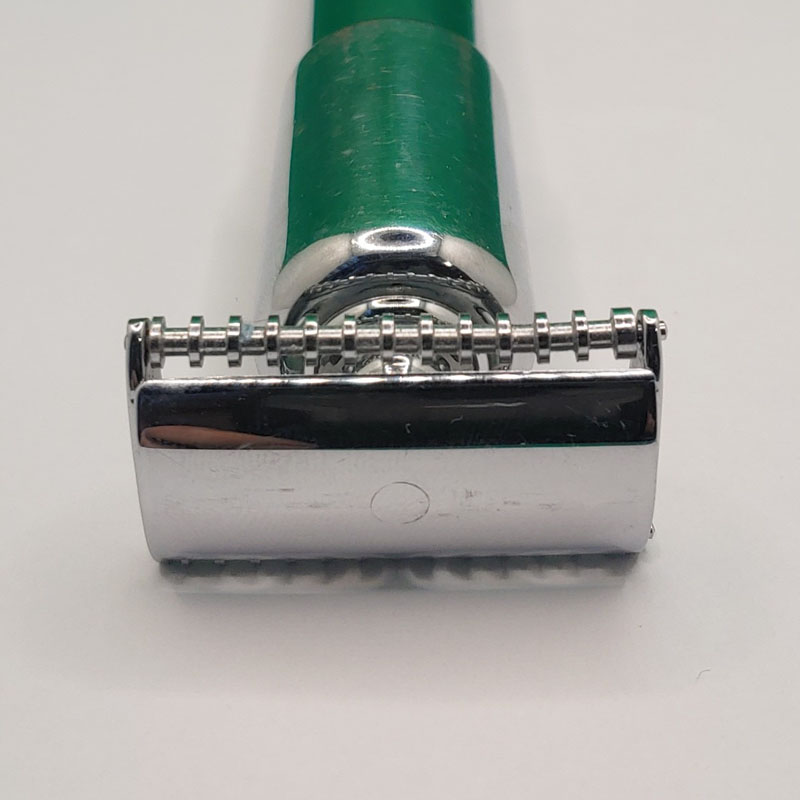
Another unusual thing about it is that the safety bars rotate.
The handle houses the "vibratory" mechanism, which I suspect is a small 3V motor with an offset weight and the battery.
The assembled razor is 146,5mm in length. The handle is 22.1mm in diameter in the section that hosues the battery and 25.5mm in diameter in the section that houses the workings. The octangular end piece is both the cap and the switch.
This one doesn't work, which doesn't really surprise me because it's not waterproof as I found water in the handle after shaving with it.
 |
 |
 |
 |
 |
 |
How does it shave?
The roller bars do make it smooth, but it's at its most open a mild shaver. With a Wizamet SI Blade, I could bearly get three settings.
The BIG handle isn't comfortable to use.
 |
 |
 |
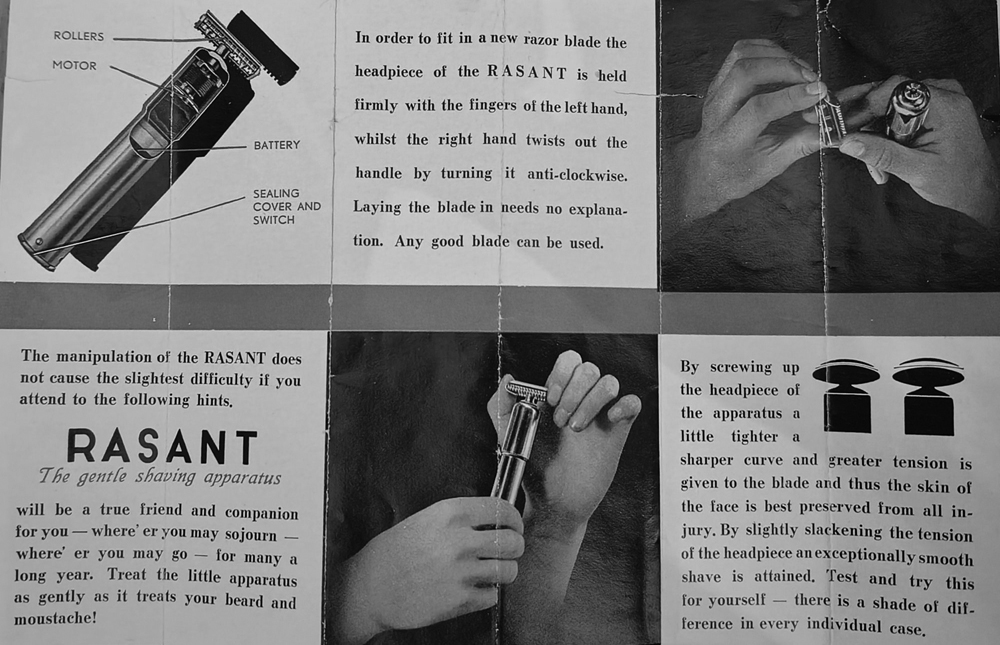
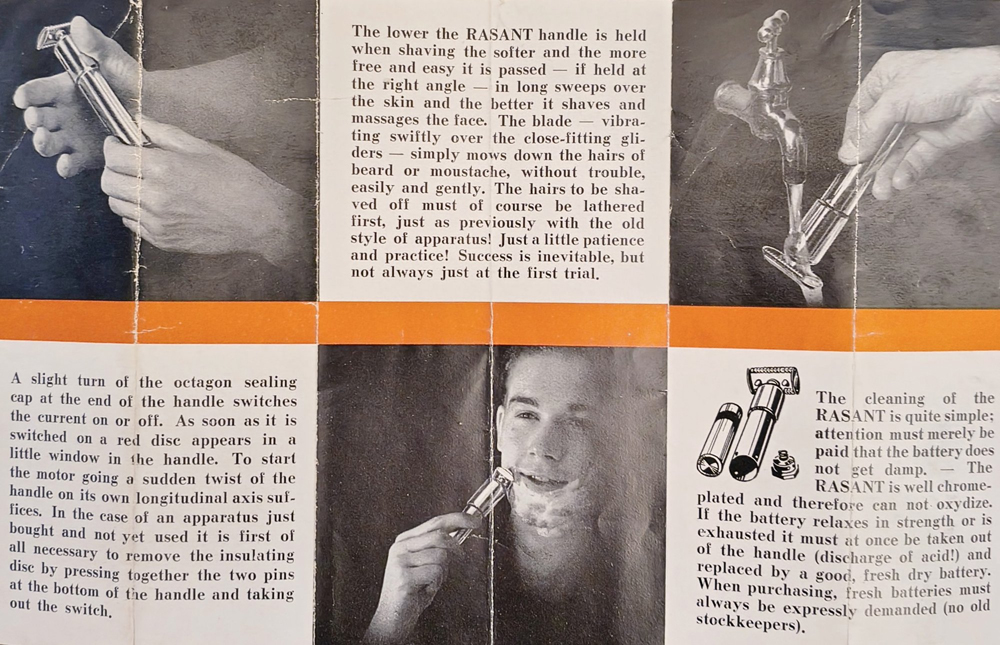
The information / instruction pamphlet that came with the razor.
These were kindly supplied by Paul, a fellow forum member who is the proud owner of a working model, which also came with the original box and the below pamphlet.
(Clicking on either image will open a bigger version of it in a new window)
 |
 |
The Battery
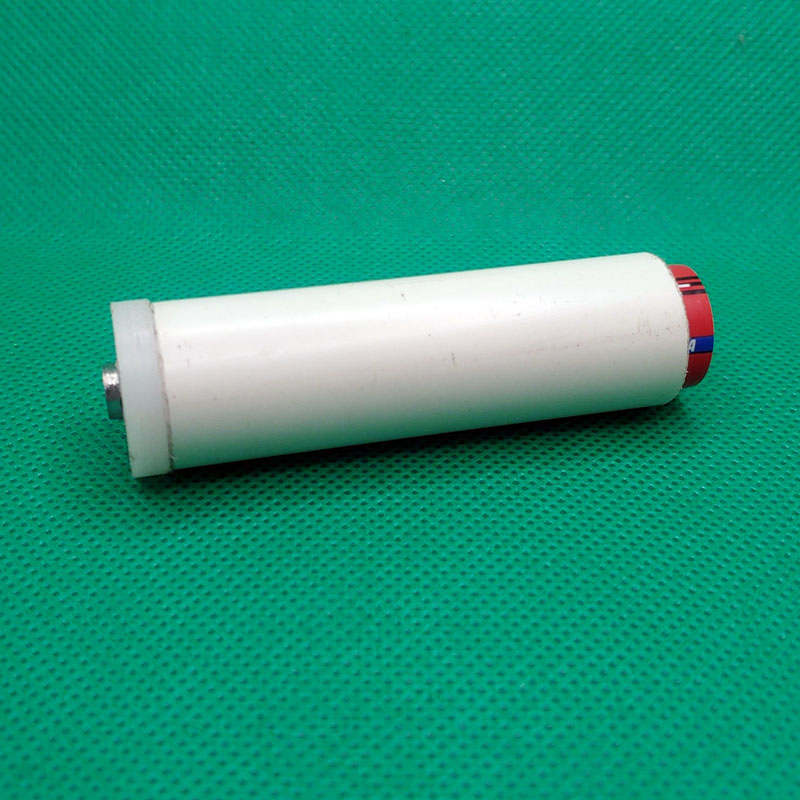
I was informed that the battery was very likely a 2R10/No8 battery. The batteries dimensions are 21.8mm in diameter and a length of 74,6mm. Voltage is 3 Volts. I was also told that there is a CR123 to 2R10 adapter available, but couldn't find one locally.
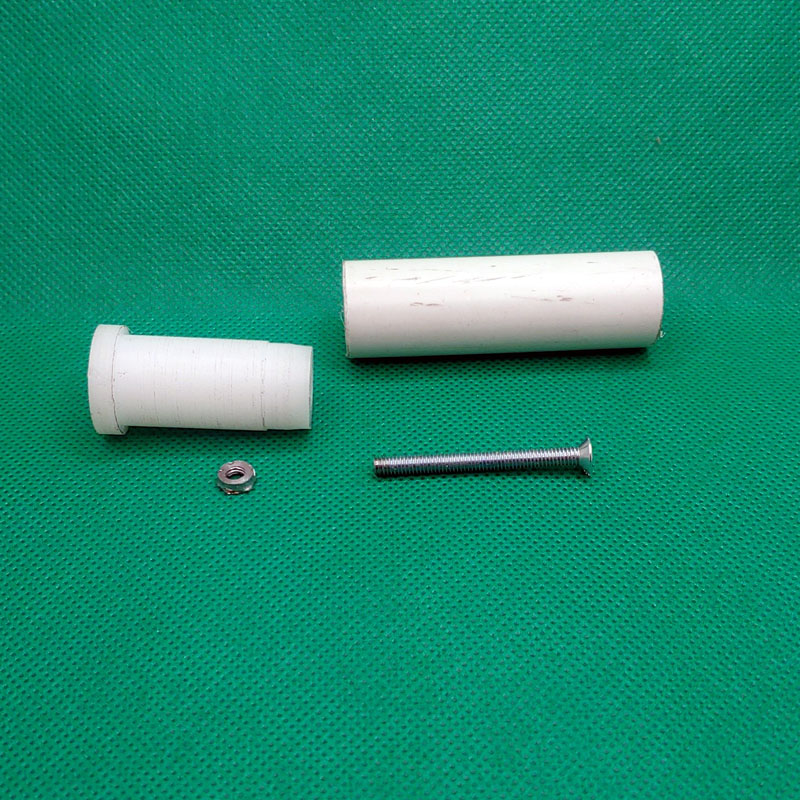
I did find a 3D Printing option but after seeing the images, I decided to turn one. I initially thought that I would turn the whole thing out of a piece of nylon, but found that a CR123 battery fits pretty well into 20mm electrical conduit. With this in mind I decided to turn only the front piece. I left it with a 21mm shoulder and ensured that it was a tight fit into the conduit. The nut and bolt are M4, with the nut turned down to more or less mimic the positive terminal. I purposefully cut the length 3mm short in case I needed to grip and pull the battery out for some reason.
The two images below pretty much tell the full story.
UPDATE: The vibratory part does not work.
 |
 |